What Is HUNGER? Beginner Guide (2026)
Intro
Hi guys, Rex here!
Today we’re taking a closer look at HUNGER, an upcoming extraction game. This video is based on playtest footage, meaning some features and mechanics may change before release.
In this beginner guide, I’ll walk you through the fundamentals: raids, the hub and overall progression system, weapons and inventory, combat and PvP, enemy types and behavior, crafting, and how extractions work.
If you’re curious about what HUNGER actually is and what kind of experience you can expect, this video will get you up to speed.
So, without further ado — let’s dive into it.
1. What Is HUNGER? (Setting + Core Concept)
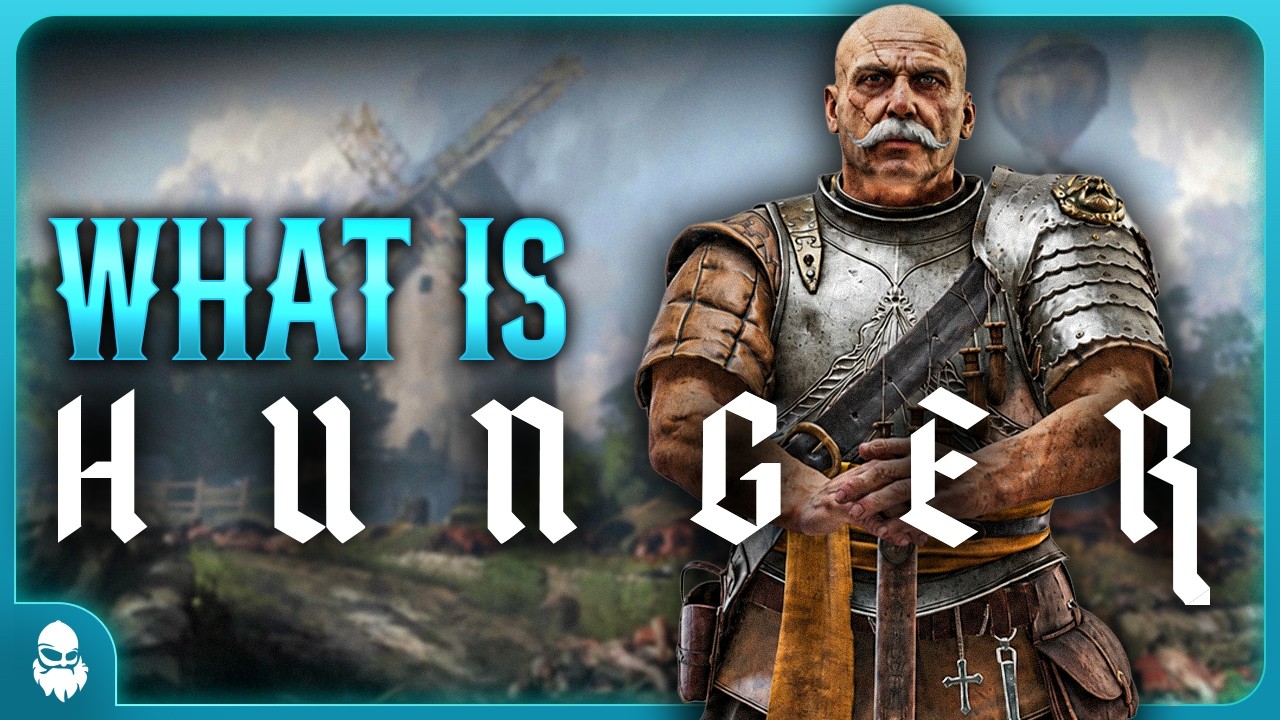
HUNGER is a first-person extraction RPG set in a plague-devastated, alternate-history version of Napoleonic Europe. Civilization has collapsed under horrific abominations known as HUNGER, and the few remaining survivors are fighting over whatever resources they can find.
At its core, the game revolves around gearing up, entering dangerous infected regions, scavenging valuables and materials, fighting both creatures and other players, and extracting with whatever you manage to secure. If you die, you lose everything you brought into the run — but your character’s long-term progression stays with you, giving the game a strong RPG backbone.
Every raid forces you to make careful decisions about where you go, how much noise you make, and how you manage your resources — and a single mistake can cost you your entire loadout.
2. Characters & Abilities
When you first start the game, you must choose one of 6 characters, known as the Living. Unlocking a character costs a psyche seed, which you can acquire later through progressing in the game.
Each of the Living comes with a unique passive, tactical, and ultimate ability, all of which can have a huge impact on how you approach various aspects of the game.
Gabriel, the character I played during the playtest, sprints faster through his passive ability, can reduce incoming ranged damage through his tactical ability, and will heal for all damage dealt when his ultimate is active.
And while I didn’t play them during the playtest, here is a brief overview of the other Living you can choose from:
– Otto is a defensive or support-type character with heavy focus on armor repairing abilities.
– Eva is a rogue-type character with improved stamina efficiency that can move silently and blind other Living.
– Hugo is the tank character among the bunch, as all of his abilities are focused around melee movement and damage absorption from both melee and ranged attacks.
– Marie is a medic, excelling at quick revives and healing both herself and others.
– And finally, Serene is a vodou expert, immune to poison. She can move faster while using her tactical ability, and poison other Living with her ultimate.
3. The Chateau (Hub, Vendors & Progression)
Between raids, you’ll return to The Chateau — the game’s main hub and progression center. Here you interact with NPC vendors, pick up quests, refine resources, craft items, and manage your stash.
Vendors use a reputation system, meaning the more you trade with them or complete their quests, the better gear and materials they’ll offer.
Your character also gains mastery points after level 10, which you can invest into four main categories that improve a wide variety of things, such as stamina, movement, looting efficiency, melee handling, and a lot more. As is often the case in any game featuring a skill tree, you must allocate a certain number of points before you’re able to progress to more powerful options. Early on, I invested 5 points into doubling my looting speed and 1 point into carrying an additional weapon on my sling, as well as increasing my general item slots to help with looting when I had less access to larger backpacks.
4. Raids (Maps, Navigation & Weather)
Raids in HUNGER are tense and immersive. There’s no minimap or glowing objective markers. Instead, you’ll navigate using your compass and your map as you explore the world. It’s a grounded approach that encourages exploration while still giving you enough information to find your way around.
The game currently features three maps — Jaques Bridge, Sombre Forest, and Sarlat Farm — each around one square kilometer. Each map is unique, atmospheric and filled with opportunities for both PvE and PvP encounters.
Before you load in, the game shows the current weather and time of day, both of which matter in terms of which loadout you’ll want to bring in and how you approach various situations.
A typical raid has you searching abandoned buildings, barns, cellars, and ruins for loot, dealing with infected enemies, keeping track of your stamina, and listening carefully for the sounds of other players who might be doing the same thing or trying to ambush you.
5. Weapons, Ammo Types & Looting
Weapons in HUNGER range from simple weapons like clubs and daggers to maces, swords, axes and polearms as well as ranged weapons such as pistols, muskets and repeating rifles.
Each melee weapon has its own rhythm — some are fast and stamina-efficient, while others hit hard but punish you if you miss. Guns feel slow and deliberate, especially early on. Later weapons feel more refined but combat always rewards accuracy and discipline over volume of fire.
Ammo comes in multiple quality tiers, from crude to exotic, with higher tiers offering better consistency and performance.
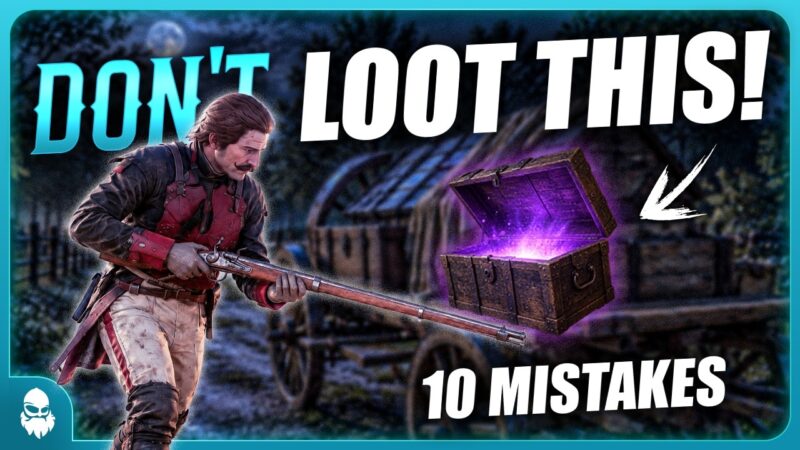
Looting is a fundamental part of each run. Abandoned structures, supply caches, cellars, and ruins can contain crafting materials, healing items, ammo, armor pieces, food, drinks, and rare weapons. Learning where the high-value spots are — and knowing when you’ve stayed too long — becomes essential.
6. Inventory, Gear Slots & Loss on Death
Your inventory is fully slot-based, not weight-based. Everything you bring — weapons, healing items, armor repair tools, food, drinks — must fit into your gear slots or backpack.
Better backpacks and hip bags increase your carrying capacity, and your Weapon Holster lets you extract extra weapons even if you aren’t using them. Your Lockbox acts as a safe container: anything placed in it is protected if you die, although I didn’t actually acquire one during the playtest.
Death is harsh in HUNGER. If you die in a raid, you lose all gear and loot that isn’t stored in your lockbox. Only your long-term character progression stays with you.
And if you ever lose absolutely everything, the game always gives you a basic weapon so you can start rebuilding immediately.
7. Combat System (Melee, Ranged & Stamina)
Combat is slow, punishing, and very intentional. Melee combat uses directional swings — you choose your angle by moving your mouse. Light attacks are fast and don’t consume a lot of stamina, while heavy attacks deal more damage but burn stamina quicker.
The scroll wheel can be used for quick stabs or overhead swings. Blocking is crucial but drains stamina based on how hard you’re hit and while you’re in the blocking stance. You can also dodge in any direction to quickly avoid incoming attacks, but doing so comes at a relatively high stamina cost.
Ranged combat is equally demanding. Reloads take time, especially with early firearms, and every shot matters. Running out of ammo or mistiming a reload during a fight can easily get you killed.
HUNGER uses two stamina bars: one for melee actions, indicated by the blue stamina bar, and one for movement, which is displayed in yellow.
8. PvP
PvP in HUNGER is brutal and unforgiving. Most fights happen at close or mid-range, shifting quickly between gunshots and melee exchanges. Stamina management becomes everything — burning stamina on missed attacks or reckless movement is the fastest way to lose a fight.
Sound discipline matters a lot. Looting, healing, repairing armor or moving around can give away your position.
Abilities can swing fights dramatically. Defensive tactical abilities can keep you alive longer, and ultimates can turn a losing fight into a winning one if used at the right moment.
Knowing when to fight and when to run is a core skill in HUNGER.
9. Armor, Repairs & Healing
Armor provides a buffer through armor bars that take damage before your health does. Once a bar breaks, it remains broken until repaired.
You can repair armor with fast, limited-use armor kits, or with tongs, which are infinite but very slow.
Healing works similarly. Ampoules provide quick healing bursts, while bloodbags heal slowly but can be used repeatedly. Timing your healing correctly can easily decide whether you live or die.
10. Enemy Types & Sound Traps
The world of HUNGER is filled with plague-twisted abominations. Dregs attack fast and in numbers, Waifs crawl unpredictably and close distance quickly, Bloaters rush you and explode into a poisonous cloud, Shamblers hit hard but move slowly, Droolers are fast, tanky and terrifying, and Brutes act like mini-bosses capable of dealing huge chunks of damage in a single swing.
Sound traps like crows and hanged bodies create loud audio cues when disturbed. Triggering them can give away your position instantly as it can be heard from far away.
11. Professions & Crafting
HUNGER features nine professions — three gathering and six crafting — that feed directly into your long-term progression. Gathering materials during your runs lets you craft better gear back at the Chateau, and leveling your professions unlocks higher-quality recipes. You can also find blueprints in your raids that must be brought back and learnt at the Chateau.
During the playtest I picked up the conservator & gunsmith professions. Conservators can gather gunpowder and components for weapons in raids and refine items at workbenches in the Chateau. These items can then be used by the gunsmith profession to craft weapons and ammo. Levelling your professions follows a typical MMORPG-style progression system. You level it to 75, then move on to a new NPC to unlock levelling to 150, 225, 300 and so on. Acquiring professions early on can be very useful as it allows you to acquire more resources and weapons than you otherwise would.
12. Extraction Mechanics
Upon entering a game, no extracts are available. The first one opens a few minutes into the raid, and the second becomes available at the final 10-minute mark. When an extract is active, you’ll see its icon on your compass. If you’re looking in the direction of an extract, you’ll also see the symbol on your screen, which increases in size as you move closer.
To extract, you enter the extraction zone and survive for 30 seconds. Once the timer completes, you interact with the air balloon and leave instantly.
If another player is already in the area, the extraction balloon emits red smoke, clearly warning you that the zone is contested. This helps prevent ambushes and gives you time to reposition.
Outro
And that’s everything you need to know to get started in HUNGER. It’s a dark, gritty, and surprisingly deep extraction RPG, and once you understand the core mechanics, it becomes incredibly rewarding.
If you found this guide helpful, consider leaving a like, and subscribe so you don’t miss my upcoming HUNGER content once Early Access arrives — including weapon breakdowns, progression guides, and full runs as the game develops.
Let me know in the comments: What do YOU think about HUNGER, and will you be giving it a try?
Thanks for watching, and I’ll see you in the Chateau!