The BUDGET Mosin! Obrez Mastery | Hunt: Showdown 1896
Intro
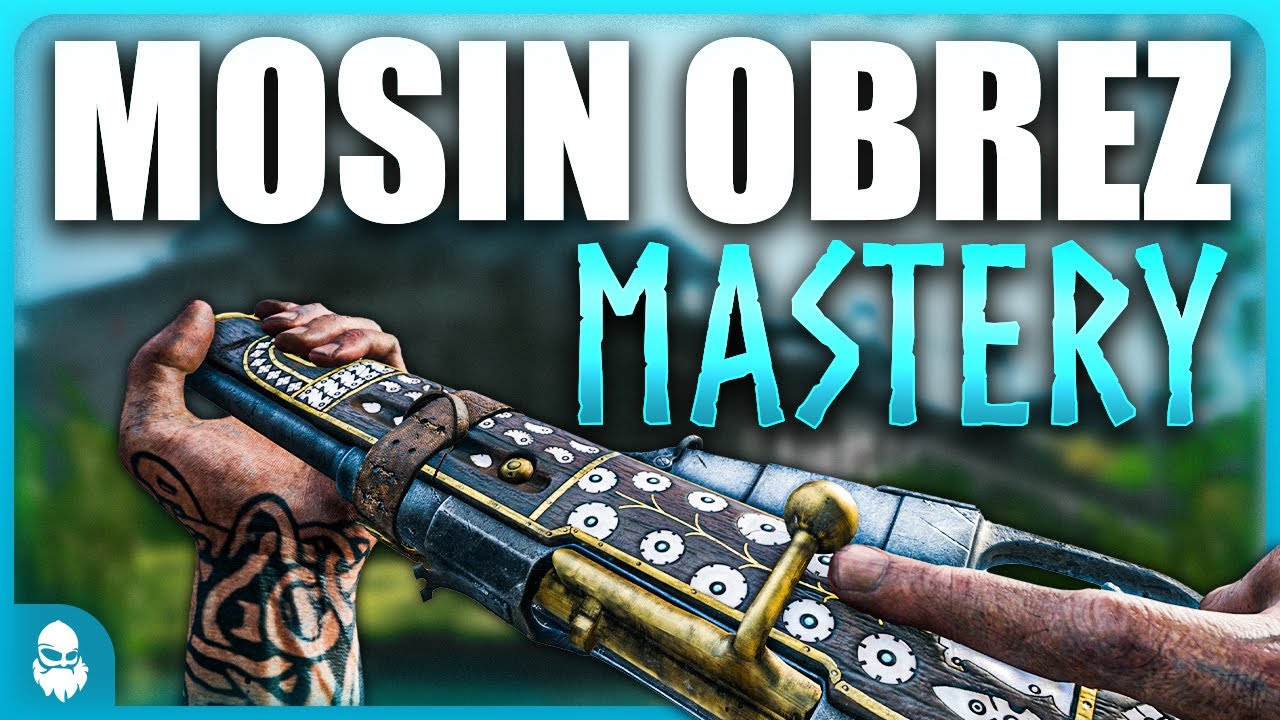
Hi guys, Rex here! The Mosin Obrez has been in Hunt: Showdown for years as the cut-down little brother of the Mosin Nagant. Once part of the same family, it now stands on its own, with a couple of new additions — Namely the Obrez Match and the Match Sharpeye.
Generally speaking, the Obrez is cheaper than the Mosin Nagant, but that lower price comes with noticeably worse stats. Still, it fills a unique niche as a 2-slot long ammo option that can be paired with a wide variety of loadouts.
The Obrez family currently includes five variants.
- The Mosin Obrez, a two-slot baseline version.
- The Obrez Extended, identical to the regular but with a larger magazine, giving you a total of 25 rounds instead of 15. This makes it especially appealing as a backup to ammo-hungry primaries like the Avtomat.
- The Obrez Mace, which functions like the base Obrez but adds a rear bludgeon for melee.
- The Obrez Match, a three-slot variant added in a recent update. It sits between the Obrez and the full Mosin Nagant in terms of stats.
- And finally the Obrez Sharpeye, a scoped version of the Match with a deadeye sight, making it the very first Mosin variant to use that scope type.
Price-wise, the Obrez and Match variants range from 290 to 362 Hunt Dollars, while the full Mosin Nagant costs 620 for the iron sight and 713 for the sniper. So, while the Obrez family is significantly cheaper, the trade-off comes in raw performance.
Let’s look at the stats. The standard Obrez deals 126 damage, with a drop-off range of 100 meters and a velocity of 520 meters per second. The Obrez Match improves slightly, with 130 damage, 105 meters drop-off, and 540 meters per second velocity. Compare that to the Mosin Nagant’s 136 damage, 135 meter drop-off, and 615 m/s velocity, and you can see how much more effective the full rifle still is at range.
For ammo options, you get three choices.
- Standard long ammo, with the stats I just mentioned, capable of penetrating both wood and metal.
- Incendiary, which ignites hunters on the first hit within 40 meters for long ammo, or two hits beyond that range, though it loses penetration entirely.
- And Spitzer, which lowers base damage and increases recoil, but gives you higher penetration and velocity, plus the rare ability to penetrate targets for collateral kills.
Mechanically, the Obrez reloads just like the Mosin Nagant. It performs partial reloads, meaning you’ll eject a live round if you reload before emptying the magazine. To avoid this, you can use cycle reloading: either reload immediately after firing, or hold down the fire button after your shot to keep the action open until you’re ready to reload. If your magazine is completely empty, you can clip reload, quickly filling it with five rounds at once. The Bulletgrubber trait can also be taken to catch those ejected rounds mid-air, but with practice, manual reload techniques work just fine.
In terms of loadouts, I experimented with several different pairings. The regular Obrez worked especially well alongside the Hunting Bow, since they’re both two-slot weapons. This is the loadout I found myself enjoying the most, and as a bow main, it felt incredibly versatile. The Obrez handled my medium to long-range fights while the bow carried me up close, giving me strong options across the board.
With the Match and Sharpeye, I tried a few other setups. Pairing with a Sparks Pistol gave me extra long ammo and more sustainability in drawn-out fights. I also ran a LeMat Pistol with FMJ and slugs for stronger close-range potential, and an Uppercut when I wanted something in between. Taking the Quartermaster trait for 6 trait points opened up the option of running the Haymaker for even better close-range dominance, with the added bonus of being able to load slugs for one-shot potential.
In this video, I am putting the Mosin Obrez & Match variants to the test. At the end of the video I’ll share my thoughts and recommendations, so stay tuned – but without further ado, let’s dive into it!
Thoughts & Recommendations
After having played the Mosin Obrez and its variants for a couple of days, here are my thoughts!
Honestly, it performed just about as expected, but it is ultimately just a weaker Mosin. The Match variant in particular felt redundant — essentially a worse three-slot Mosin Nagant. The addition of this weapon is a bit puzzling, since it doesn’t add much that we didn’t
already have. The Sharpeye is more interesting, being the first Mosin with a deadeye scope, and I did enjoy playing it, but when you compare it to other deadeye rifles like the Berthier Deadeye, it doesn’t seem like a necessary addition to the game.
Out of all the variants, I found myself preferring the regular two-slot Obrez the most. It’s cheap, reliable, and makes an excellent companion to the Hunting Bow. I don’t see myself playing the Match variants much in the future unless they are buffed. If I want a three-slot Mosin, I’d rather pay the extra Hunt Dollars for the full Mosin Nagant or even the Sniper. They’re simply stronger, more effective rifles.
Ammo-wise, I stuck to standard rounds. The base velocity felt good enough, and I prefer to keep my rifles around the 500–600 velocity for consistency across weapons. Spitzer is powerful, but I don’t like constantly switching between 520 and 730 velocities. Incendiary also feels too situational compared to the ability to penetrate surfaces, so I personally don’t run this ammo type often.
The main drawback of the Obrez family is close-quarters combat. They just don’t bring enough firepower up close. That’s why pairing with the bow, Uppercut, LeMat slugs, or the Haymaker with slugs was so important. Each of those helped cover the gap in close range while letting the Obrez focus on the mid- to long-range.
So what’s the final verdict? The two-slot Obrez is a solid, affordable sidearm for both two-slot and three-slot primaries, especially when paired with the bow. It gives you long ammo punch at a reasonable price. The Match, on the other hand, feels like an unnecessary bridge between two weapons that already have clear roles. If you want a three-slot Mosin, you’re better off upgrading to the real thing.
Overall, I had fun with the Obrez, but I see myself sticking to the regular variant in the future.
If you made it this far, I’d love to hear your thoughts! What do you think of the Obrez and its new variants? Do you think the Match was a good addition, or is it unnecessary? Drop a comment down below — and until next time, I’ll see you in the Bayou!