Gunplay & Weapon Handling Traits EXPLAINED! Full Guide & Tier List | Hunt: Showdown 1896
Intro:
Hi guys, Rex here,
And welcome back to my Ultimate Trait Guide & Tier List series for Hunt: Showdown 1896.
In the last part, we covered movement, stamina management, and mobility – the traits that determine how well you move during and between engagements. But all of that ultimately depends on one thing: how well you manage your weapons and ammo once the fight begins.
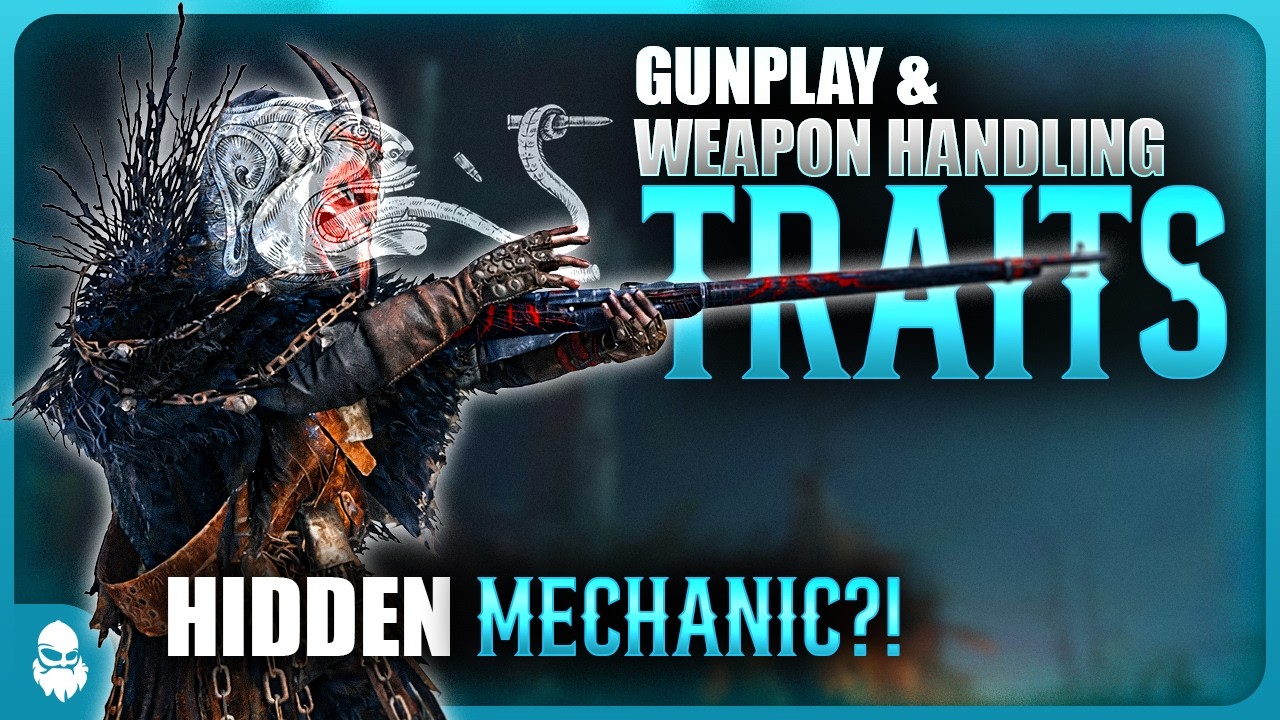
Today, we’re focusing on gunplay and weapon handling — traits that directly impact your rate of fire, reloading efficiency, recoil control, weapon sway, and overall combat consistency. Some of these traits can completely change how a weapon performs, while others are much more situational or dependent on specific loadouts. And a few of them offer hidden benefits that the game doesn’t clearly explain.
Just like before, I’ll explain exactly what each trait does, highlight key mechanics and synergies, and then rank them based on real, practical value in both solo and team play.
So without further ado, let’s dive into it!
1. Levering
First up in this category, we have Levering. This trait costs seven points and works with any lever-action weapon, including the Terminus, which is the only shotgun in the game that benefits from this trait.
Levering greatly increases your rate of fire while hip-firing, giving you a huge boost in close-range efficiency. It allows weapons that are normally single-shot or slower firing to become much more aggressive, making them far more viable in a lot of situations. This can be particularly impactful if you’re playing solo and you need that extra firepower in close to mid-range to compensate for being outnumbered.
For compatible weapons, Levering is basically always an upgrade. But because of the higher cost, it often ends up being more of a luxury trait. I typically pick it up after a successful extract as a great addition to an already established build, rather than something I prioritize early. In some cases, like with the Terminus, I typically get the points for Levering first, before running the Terminus, as the weapon is rather weak without it.
Because it is effectively always an upgrade but not essential for most builds, I’m placing Levering in the A tier.
2. Iron Eye
Next up, we have Iron Eye. This trait can be assigned for three points and allows you to stay in ADS when using bolt-action, lever-action, and pump-action weapons.
What the game doesn’t tell you is that Iron Eye also increases the firing speed for all weapons that can use it, although the exact increase varies between weapons. In other words, it’s great in situations where you need to land quick shots or follow up immediately.
Iron Eye gives you that extra edge and is a great pickup for a wide range of weapons. Like with Levering, it’s more of a nice-to-have than a must-have. I didn’t use it much for a long time because my playstyle was more centered around repositioning between shots, but lately I’ve been using it more and have found it to be very solid.
Because it’s a strong trait but highly dependent on weapon choice and playstyle, I’m placing Iron Eye in the A tier.
3. Fast Fingers
Next up, we have Fast Fingers. This trait costs four points and allows you to prepare bullets between your fingers for faster reloading with single-shot rifles and their non-pistol variants. This includes the Sparks, Martini Henry, Maynard Sniper, and Springfield.
Fast Fingers is a bit of a weird one in my opinion. It’s really strong on the Springfield and decent on the rest, but overall it falls into that ‘nice to have’ category rather than something you truly need.
One important detail is that the prepared bullets stay when you switch weapons, but if you switch ammo types, you’ll need to prepare them again. That can make it a bit inconsistent depending on how you’re managing your loadout.
The main issue with this trait is the cost. At four trait points, it starts to become a harder sell, especially when combined with the value of the trait slot itself in late builds. Most of these weapons perform perfectly fine without it, which makes it difficult to justify over stronger alternatives.
Because it’s solid but not essential, I’m placing Fast Fingers in the B tier. It’s not as impactful as Iron Eye or Levering, but it can definitely make a difference in the right situations.
4. Fanning
Next up, we have Fanning — the Wild West trait of Hunt: Showdown. This trait costs eight points and enables rapid hip-fire for all single-action pistols. Originally, this only applied to one-handed pistols but has since been expanded to include two-handed pistols like the Haymaker, Uppercut Precision, and Nagant Precision variants.
Fanning falls into a similar category as Levering, but for a different set of weapons. It can often make or break a loadout, especially if both your primary and secondary are on the slower side — and even more so if you’re playing solo. Fanning gives you that intense close-range firepower that many builds otherwise lack.
The downside is the cost. At eight trait points, this sits firmly in luxury territory, and it’s something you’ll rarely ever run on a fresh Hunter. On top of that, performance varies a lot depending on the weapon. The Haymaker and Uppercut can be very unreliable unless you’re extremely close, while others are much better suited for controlled tap-firing, like the Pax Trueshot for example. Then you have weapons like the Conversion or Nagant Silencer, which give you that laser-beam feeling in close range.
My personal favorite is the Conversion. It’s cheap, reliable, and an absolute beast with Fanning.
Because it’s a luxury trait but a huge upgrade for a wide range of loadouts, I’m placing Fanning in the A tier. It’s rarely a must-have, but it can make you feel significantly more confident in close-range situations, especially when playing solo. And while some people compare it directly to Levering because of the lower cost, it’s important to remember that these two traits benefit entirely different weapon categories.
5. Scopesmith
Next up, we have Scopesmith. This trait costs two points and allows you to stay in scope view after firing a shot with scoped weapons. That description is actually a bit misleading, since you can already do this with single-shot rifles by holding down your fire button after taking a shot, which lets you stay in scope view and track where your shot landed.
For other scoped weapons, though, you’re normally forced out of scope when cycling the next round. That’s where Scopesmith comes into play. But the real value of this trait is something the game doesn’t tell you — it actually increases the firing speed for all scoped weapons that are not single-shot, similar to how Iron Eye works for other weapon types.
That means faster follow-up shots, which can make a huge difference in situations where multiple enemies are exposed or when you need to land shots quickly to stay alive. Like Iron Eye, I didn’t use this trait much for a long time because my playstyle focused more on repositioning between shots. But even aggressive snipers will find themselves holding angles at times, and in those situations, Scopesmith becomes incredibly valuable.
These days, I run it most of the time on non-single-shot snipers and consistently get good value from it. Just like Iron Eye, the exact benefit varies depending on the weapon.
Because it’s situational but very impactful in the right scenarios, I’m placing Scopesmith in the A tier.
6. Steady Aim
Next up, we have Steady Aim. This trait costs two points and gradually reduces weapon sway while aiming through scopes, including aperture sights, making it easier to land accurate shots.
And despite that, I rarely run this trait. The reason for that is twofold. First, I consider it somewhat of a crutch, especially for newer players. If you rely on Steady Aim to control your shots, you’re not really learning to manage sway on your own — and that becomes a problem in situations where you don’t have the trait, like on a fresh Hunter where other traits might take priority.
Second, you can achieve a very similar effect by simply crouching. Crouching reduces sway across all weapons, not just scoped ones, and by integrating that into your playstyle, you’re improving your consistency without spending trait points or more importantly a trait slot.
That said, there are definitely cases where Steady Aim can be valuable. If you play at very long ranges or take a more methodical approach, the extra stability can make a difference. There are also situations where crouching isn’t an option for example due to lack of angles, and being able to control sway while standing becomes much harder. And of course, you can stack both — giving you better control standing and near-perfect stability when crouched.
Personally, after thousands of hours of playing sniper loadouts, I’ve never depended on this trait. I might pick it up occasionally, but it’s never a priority. At a certain level, landing shots becomes more about crosshair placement and flicking onto targets rather than correcting for sway, which further reduces the need for it.
Because it’s highly preference-based and not something I typically rely on, I’m placing Steady Aim in the C tier. It’s completely optional, but in the right hands and for the right playstyle, it can still be very impactful.
7. Ambidextrous
Next up, we have Ambidextrous. This trait costs three points and speeds up reloading for dual-wielded pistols, including custom clip reloads for semi-auto sets like the Bornheim and Dolch.
In my opinion, this trait is quite redundant most of the time. The main reason is that when you’re running dual pistols, you already have a large ammo pool before needing to reload. In most cases, that’s more than enough to get through an engagement, and I find it very rare that I actually need to reload in a pinch.
That said, there are certain weapon combinations where it can be helpful if you have the space for it. It’s never a bad trait to have, but at the same time, it’s rarely something you’ll miss if you don’t run it.
Because of that, I’m placing Ambidextrous in the C tier. It’s decent, but not something I consider important in most builds.
8. Bulletgrubber
Next up, we have Bulletgrubber. This trait costs four points and allows you to recover rounds when performing partial reloads. It applies to a wide range of weapons, for example the Mosin-Nagant variants, the Bornheim, and the Specter shotgun, just to name a few.
The core purpose of this trait is to let you reload without wasting ammo, but in many cases, you can work around that using what’s known as cycle reloading. That means inserting a new bullet before the chamber closes — either by reloading immediately after firing, or by holding down the fire button to keep the chamber open, then reloading at your own pace. For a lot of weapons, that makes Bulletgrubber effectively redundant.
There are some important exceptions, though. The Mosin-Nagant Avtomat reloads in five-round clips, but will reload bullets one by one if you’re not missing five rounds or don’t have enough ammo for a full clip. Since that weapon is already very limited on ammo, Bulletgrubber becomes extremely valuable for sustaining your ammo pool and topping up the weapon between bursts.
Another example is the Terminus. When paired with Levering, which is how it’s most commonly used, the weapon automatically cycles the next round, making cycle reloading impossible. In that case, Bulletgrubber becomes much more relevant to conserve ammo. If you’re not using Levering, though, you can still cycle reload normally.
Then you have the Berthier, which uses a three-round magazine and always reloads the full clip regardless of how many rounds are left. That makes Bulletgrubber useful if you reload frequently. However, since the reload is quick, you can also just fire any remaining shots before reloading. There’s also a lesser-known interaction here — because the Berthier can run two ammo types, switching between them does not waste any ammo, allowing you to conserve rounds without needing Bulletgrubber at all.
And finally, if you fully empty any compatible weapon before reloading, Bulletgrubber doesn’t matter, since there are no bullets left to eject upon reload. Because of all this, the trait ends up being very situational.
Overall, I’m placing Bulletgrubber in the B tier. It’s powerful and very nice to have in the right situations, but rarely essential. If you want to learn more about reloading mechanics and ammo types for any weapon, I’ve covered the individual weapon families and their mechanics in depth in my mastery guide series.
Outro:
And that wraps up Part Four of my Ultimate Trait Guide & Tier List.
Today we covered gunplay & weapon handling — the traits that directly impact how your weapons perform in fights, from rate of fire and reload efficiency to overall consistency and pressure.
Some of these traits can completely change how a weapon feels and performs, while others are much more situational or dependent on specific loadouts. And as always, it’s not just about how strong a trait is on paper, but how often you actually get value from it and what you’re giving up in return.
In Part Five, we’ll be diving into melee, throwables and special weapons and continuing to flesh out the full tier list piece by piece.
If you found this helpful, make sure to subscribe so you don’t miss the next part. And if you disagree with any placements or think a trait deserves to move up or down in the tier list, let me know in the comments — I’m curious to hear your opinion!
Thanks for watching, and I’ll see you in the next one.