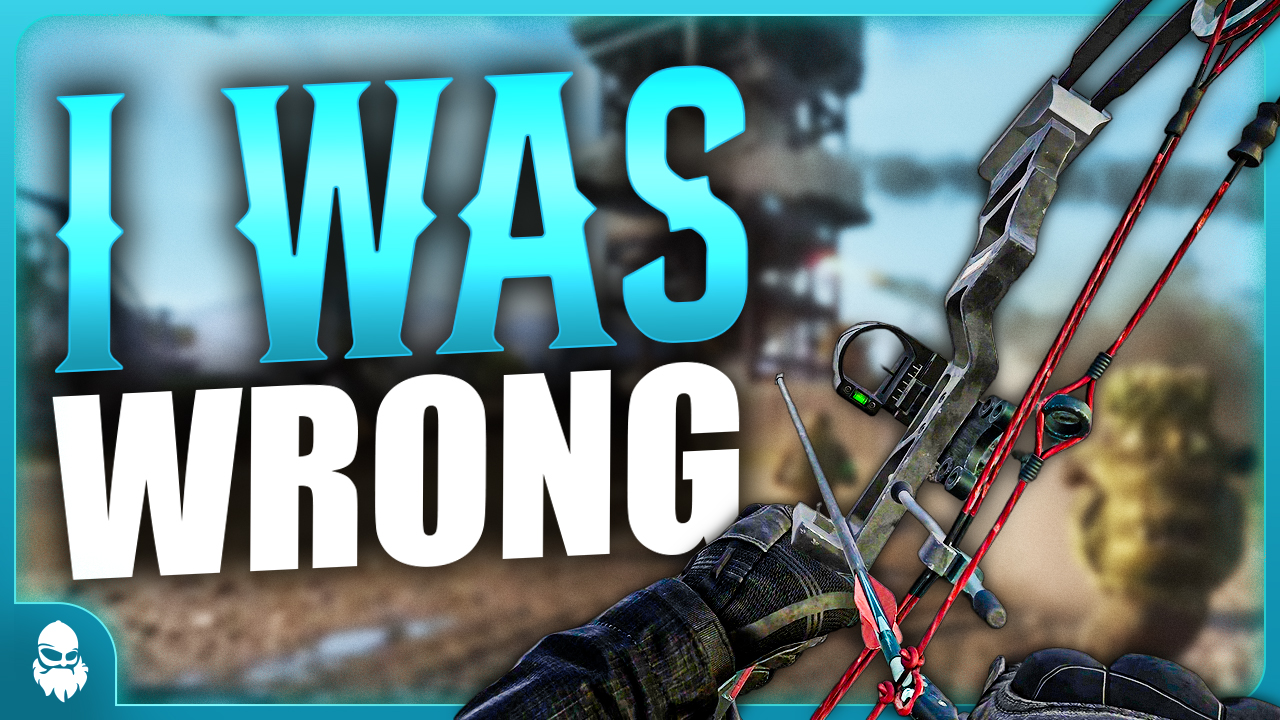
I Was REALLY Wrong About Wardogs… | Wardogs (2026)
When I first started playing Wardogs, I honestly wasn’t sure if the game was for me.
After a few hours, I was already frustrated with the grind, had no idea what was going on half the time, and was seriously considering quitting. But the more I played, the more I started to realize that the problem wasn’t necessarily the game.
It was the way I was playing it.
I’m now over 50 hours deep, and somewhere along the way, my opinion completely changed.
So in this video, I’ll go through five things I learned the hard way, and why I think Wardogs is a way better game than I initially gave it credit for.
So buckle up, and let’s dive into it!
1. Stop Forcing The Grind
The first thing I had to learn in Wardogs was to stop forcing the grind.
Like me, you might be eyeballing a specific weapon or vehicle and trying to unlock it as quickly as possible. The problem is that getting there can take a lot of time, and if you continuously force yourself down one progression path just because you want whatever is waiting at the end, you might burn yourself out before you get there.
And that’s exactly what I did.
As a Hunt: Showdown bow main, I naturally wanted to try the compound bow, but unlocking it requires quite a bit of Recon experience. I mean A LOT of experience. To the point where my estimate wasn’t just slightly off. It actually ended up taking more than twice as long as I had anticipated – over 20 hours of playtime.
Turns out, sitting in bushes spotting enemies with binoculars, or forcing yourself to use a marksman rifle you’re not enjoying for that long, is a pretty tedious way to play the game.
And eventually, I came to the conclusion that I was approaching the game the wrong way.
At that point, I stopped worrying so much about getting there quickly and started experimenting with everything else the game had to offer.
I bought an RPG and shot down a helicopter. That was pretty fun. And then I shot a player with it, which was hilarious. And I did some base building and vibed with the other construction workers. Then I bought a helicopter. And then immediately crashed that helicopter. So I bought another one and crashed that one too.
But you know what? I had A LOT more fun!
Ironically, I was still making consistent progress along the way, and while it may not have been as efficient, it certainly was a lot more enjoyable.
And the really messed up part?
Once I finally unlocked the bow, I didn’t enjoy it any more than the Mosin I’d grinded for countless hours to get there. In fact, coming back to the Mosin after a couple of days was a breath of fresh air, as the bow simply didn’t feel that effective against the tier 4 armor meta.
So all those hours I’d spent rushing toward one specific goal ultimately taught me the exact opposite lesson.
I didn’t need to rush at all.
2. The Chaos Eventually Makes Sense
When I first started playing Wardogs, I couldn’t quite figure out the direction of the game.
I think I had expected more of a traditional shooter experience, where you generally understand which direction the enemy is coming from and where you’re most likely to run into players.
Turns out, Wardogs is not quite like that. Although in some ways, it is.
I’d make my way through the outskirts of the warzone thinking I was safe, just to get sniped from hundreds of meters away. Then I’d push towards the center of the map and hardly find anyone at all.
Eventually, I realized I was looking for an answer that wasn’t really there.
The warzone is the warzone.
There are obviously locations that are much more heavily contested than others, and over time you start recognizing where you’re particularly likely to find action. But because of how open the game is, and how differently each player approaches it, you never really know what you’ll find around the next corner.
With that in mind, what initially felt like random chaos started feeling much more natural. I stopped expecting the battlefield to funnel everyone in one obvious direction and started treating the entire zone as somewhere I could potentially encounter other players.
And changing that expectation also meant changing the way I played.
3. Playing Fast Is The Easiest Way To Die
One of the quickest lessons Wardogs taught me is that playing fast is a really easy way to get yourself killed.
You are almost never as safe as you think you are.
Someone might have spotted you from hundreds of meters away, there could be a sniper on a rooftop you haven’t noticed, or a player could be working their way through the building you’re about to enter.
Early on, I learned this the hard way while playing as a sniper.
I’d find what looked like a great position, spot someone, take a shot, maybe take another one…
Just to get absolutely domed from a position I had no idea I needed to watch out for.
A lot of the time, I was making myself an incredibly easy target. I’d sit on top of towers because they gave me a great view, repeatedly fire from the same location, and focus so heavily on the person in front of me that I’d completely forget about everyone else who might be watching.
Over time, I started approaching those situations very differently.
Instead of sitting on the tallest rooftop I could find, I’d look for positions that were less obvious. If I’d taken a few shots and revealed my location, I’d move. I started paying much more attention to the noise I was making and what was happening around me. And I started spending a little extra time working my way behind enemy lines before taking the first shot.
And I had much more success.
And a lot more fun!
The same idea applies when you’re playing more aggressively as well. Wardogs certainly rewards mechanical skill, but good aim doesn’t help much if you’ve put yourself in a terrible position and fight people already know exactly where you are.
For me, a more patient and methodical playstyle was far more effective, which makes sense considering I mainly play extraction shooters, where a more methodical approach is typically your best bet.
In Wardogs, staying with your teammates, thinking about where you’re moving, and choosing when to fight tends to get you much further than simply chasing every opportunity for action.
And that was a pretty significant adjustment from how I approached the game initially.
4. Almost Everything You Do Is Productive
One thing that really changed the way I looked at Wardogs was realizing that being useful didn’t necessarily involve a lot of PvP.
And once I started understanding the underlying systems, I realized that a player with 0 kills and a player with 30 kills could have contributed equally to winning or losing the match.
This is probably where Wardogs stands out the most from other shooters, since the game is a large-scale warzone where every player can choose how they want to contribute to the team.
Someone has to transport people and resources around the battlefield. Without that role being filled, you lose strength in numbers as people get stuck waiting for revives or hoping for someone to buy a helicopter.
Someone has to keep your teammates alive. Because once the team starts dropping, it can quickly be game over without medics to get everyone back on their feet.
And someone has to build and maintain the bases everyone else depends on. Without the builders, you have no air defence, no place to park the spawn vehicle, and none of the other perks that come with having a strong base.
And that’s something I really underestimated at first.
But once I stopped measuring how productive I was purely by how many people I killed, the game felt way more dynamic.
And became a lot more fun!
5. I Underestimated The Depth Of Wardogs
One of the biggest things I learned after 50 hours of Wardogs is that doing one thing doesn’t really teach you the game.
I spent most of my early hours playing Recon. And after a while, I got pretty comfortable sitting behind the frontline, finding good positions and providing sniper coverage for my team.
But then you switch to Assault and suddenly you’re experiencing the exact same war from the frontline.
Instead of watching everything unfold from hundreds of meters away, you’re the one pushing buildings, taking objectives and relying on everyone behind you to keep the war effort moving.
Jump into another role and your perspective changes again.
And I think that’s where a lot of the depth in Wardogs actually comes from.
You can become really good at one role while barely understanding what half your team is doing around you. But the more roles you try, the more you start understanding how all of those pieces fit together.
Interestingly, the progression system actually encourages you to do exactly that.
Your overall Wardog level – basically your character level – is the combined total of your individual levels across all six roles, with powerful unlocks like better armor and ammo tied to that overall progression.
So the game doesn’t just give you six different ways to play.
It actually rewards you for branching out.
And considering how much of my first 50 hours I spent playing Recon, that’s something I definitely should have done sooner.
Because the best way to progress might also be the best way to actually learn the game:
Try everything.
6. Conclusion
As we’re approaching the end of this video, I think it’s safe to say I was wrong about Wardogs.
What started as a game I was seriously considering quitting has somehow turned into a game where countless hours later, I still feel like I’ve barely scratched the surface, and I’m genuinely excited to dive back in.
I stopped worrying so much about what I thought I was supposed to be doing and just started exploring everything the game has to offer.
And somewhere along the way, I started having a lot more fun.
And I think that’s ultimately what made Wardogs click for me.
There’s still plenty I want to try, which is probably the exact opposite of how I felt during those first few hours.
And honestly, I think that’s probably the healthiest conclusion I could have landed on.
But now I’m curious whether any of you had the same experience. Did Wardogs click immediately for you, or did it take a while before you really started understanding what the game had to offer?
Let me know in the comments, and if you enjoyed the video, consider leaving a like and subscribing so you don’t miss the next one!
Thank you for watching, and I’ll see you in the next one!