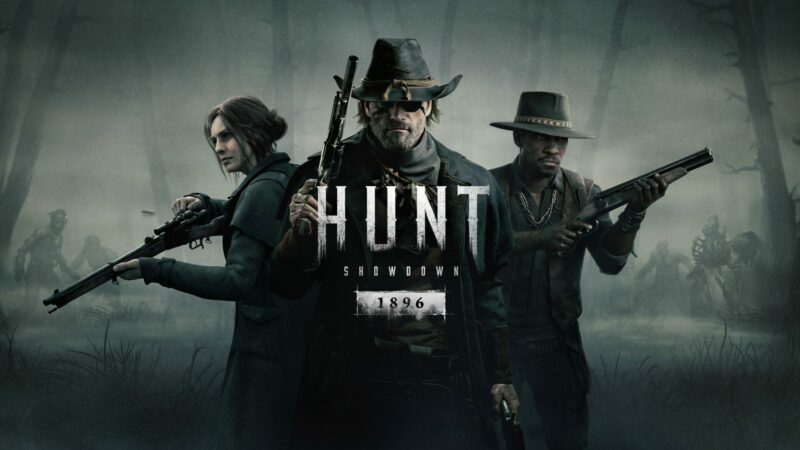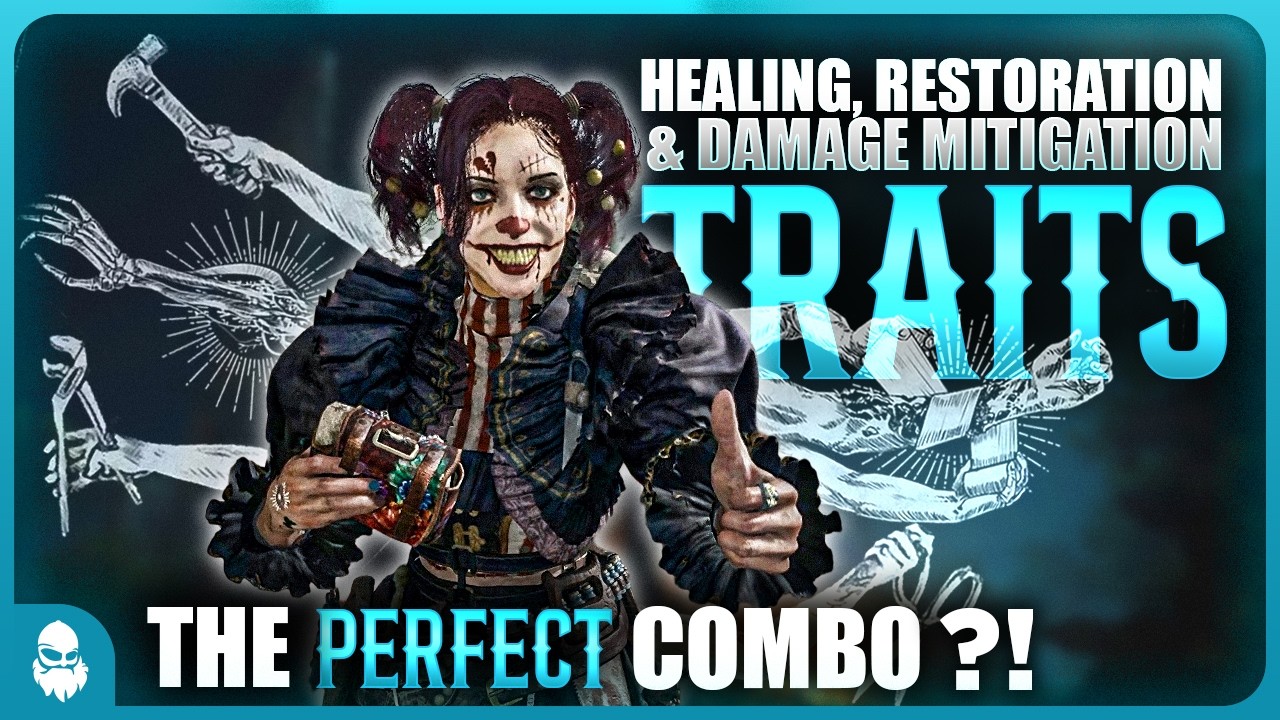
The ULTIMATE Hunt: Showdown 1896 Trait Guide & Tier List | Part 2 – Healing & Defense
Intro:
Hi guys, Rex here,
And welcome back to my Ultimate Trait Guide & Tier List series for Hunt: Showdown 1896.
In Part One, we covered Burn and Scarce traits — some of the most impactful traits in the game. But today, we’re getting into something that arguably matters even more over the course of a match: survivability.
Some of the traits in this category are absolute staples that I would never skip in a serious build. Others sound strong on paper but are far more situational than most players realize. And one of them, in my opinion, probably shouldn’t even be a trait at all.
In this video, we’re breaking down Healing, Restoration, and Damage Mitigation traits — looking at how they affect sustain, revive pressure, status effects, explosives, and overall fight tempo.
Just like before, I’ll explain exactly what each trait does, highlight key mechanics and synergies, and then rank them based on real, practical value in both solo and team play.
So without further ado, let’s dive into it!
1. Doctor
First, we have Doctor. This is one of the more expensive traits in the game, costing nine trait points, but it is incredibly strong. Doctor effectively doubles the value of your medkit, which is especially useful when you’re low on health, allowing you to restore one hundred health instead of the usual fifty.
That means you can restore two large health chunks or four small ones in a single use. And because health chunks naturally regenerate over time unless they are fully depleted, you often end up getting back to full health from just one medkit charge. For example, if you heal with Doctor while sitting at 26 health, you’ll go up to 126, and the remaining 24 will regenerate on its own even without a regeneration shot. When running larger health bars, especially as a solo with three large chunks, this effect becomes even more consistent, since healing from 1 health or higher will dip into that final bar and allow it to recover naturally.
What typically happens without Doctor is that you take a hit, use two medkit charges just to get back to full health, then take another hit and suddenly you don’t have enough charges left to heal up fully. Doctor completely changes that dynamic by massively increasing your healing efficiency and overall sustainability in fights.
Because of how much value this trait brings through raw healing efficiency and long-term sustain, it’s an easy S tier for me. And it only gets stronger when paired with some of the other traits we’ll cover later in this category.
2. Physician
Next up, we have Physician. This trait costs five points and reduces the time it takes to use a medkit from roughly five seconds down to about three. It’s not quite half, but the difference is still very significant. Two seconds might not sound like much, but in Hunt, it absolutely matters. Healing slows your movement, enemies can hear you healing, and five seconds is a long time to sit vulnerable behind cover. Three seconds, on the other hand, is often short enough to get the heal off before the opponent can react or push you. It also reduces the risk of getting killed mid-heal and allows you to reposition faster since you’re not stuck with reduced movement speed for quite as long.
It’s also worth mentioning that using a medkit automatically stops burning and bleeding at the same time. With Physician, you can heal and clear those status effects much faster in one go, which saves you valuable time in a pinch.
Now, on its own, I probably wouldn’t prioritize Physician over other strong traits. But when paired with Doctor, you’re getting double healing efficiency in significantly less time, which is incredibly strong. And if you take that one step further with Surefoot, which allows you to sprint while using tools and consumables, the synergy becomes even stronger. Those three traits together are arguably one of the best trait combinations in the game. If you really want to double down, Frontiersman adds one extra medkit charge, and two if you’re solo with Catalyst. I’ll be covering both Surefoot and Frontiersman in more detail later in this series.
Because of how powerful Physician becomes when combined with Doctor, Surefoot, and potentially Frontiersman, I’m placing it in the S tier.
3. Resilience
Next up, we have Resilience. This trait can be assigned for three points, and for team play, it is arguably one of the most important traits in the entire game. Resilience ensures that the health chunks you still have are filled when you get revived, instead of bringing you back at low health. It does not restore lost bars, it simply heals your remaining chunks.
That makes a massive difference. Without Resilience, you’re often a one-shot to almost anything in the game after being revived. With it, you can actually survive long enough to reposition, tank a shot on the way to cover, or handle difficult situations like being revived in concertina or poison. It also enables safer Necromancer revives, since the revived player isn’t instantly at critical health the moment they stand up.
I honestly think Resilience is far more important than a lot of players give it credit for. In fact, I would argue it shouldn’t even be a trait, but a core mechanic. I often joke when Resilience drops in a match that it’s a teamplay skill check to see who forgot or chose not to buy it.
For solos, this trait has no effect at all since you get a full restoration effect upon self-revive. But for team play, it’s a complete no-brainer. I never enter a team game without it, and for that reason, I’m placing Resilience firmly in the S tier for team play
4. Ghoul
Next up, we have Ghoul. This trait restores a small amount of health whenever you kill AI, and it’s a great way to preserve your healing resources like medkits, regeneration shots, or vitality shots.
Because of the mechanic we talked about earlier, where health bars naturally regenerate as long as they’re not completely depleted, Ghoul effectively puts you into that recovery state every time you kill AI. And it’s important to note that this isn’t limited to melee kills. Any killing blow you deal to AI will trigger it, whether that’s meleeing your way through the bayou or picking enemies off from range with something like a sniper rifle.
That said, trait slots in Hunt are limited, and there are already many strong and reliable ways to heal. With the synergies we covered around medkits, vitality shots, regeneration shots, in-world medkits, and four-shot boons, Ghoul ends up feeling more like a nice bonus rather than something you truly need. It only costs three points, so the issue isn’t the price — it’s the opportunity cost of the trait slot itself.
Because it’s solid but not essential, and honestly something I rarely run, I’m placing Ghoul in the B tier.
5. Vigor
Next up, we have Vigor. This trait costs three points and doubles your health and stamina regeneration while in Dark Sight, and this is one of those traits that’s incredibly strong for the price.
The most obvious synergy here is with regeneration shots or four-shot boons. Vigor effectively doubles the healing speed from those effects, which allows you to recover extremely quickly in combat while repositioning or staying mobile. It’s also worth noting that Vigor speeds up charcoaled health recovery, especially when combined with the wet status effect, which can make a huge difference in prolonged fights.
Vigor became even stronger after recovery shots and Relentless were changed to apply 24 points of charcoaling instead of fully restoring the lost chunk. Those changes indirectly increased its value as a way to stabilize and recover during longer engagements and were a much bigger buff to Vigor than many players realize.
It’s not a must-have trait, but I take it very frequently in teamplay because of how much sustain and flexibility it adds. For solos, it’s still very strong for dealing with charcoaling and getting back into fights faster through the amplified regeneration effect.
Because of its consistency, synergy potential, and low cost, I’m placing Vigor firmly in the A tier.
6. Salveskin
Next up, we have Salveskin. This trait costs two points and limits how much fire damage you take, as well as how quickly burning escalates. Back in the day, it used to slow down burn speed on downed hunters, but that is no longer the case. Salveskin now only protects you while you are alive.
With Salveskin, you don’t ignite on the first hit in situations where incendiary ammo would normally set you on fire — that’s within twenty meters for compact ammo, thirty for medium, and forty for long ammo. It also prevents burning and the time to stop burns from escalating.
There’s definitely value here. Fire is common, and reducing the damage and ignition risk can absolutely make a difference. That said, ever since the nerf that removed its downed-body protection, I personally don’t prioritize it nearly as much as I used to. There are simply too many other traits that provide more consistent value.
For me, Salveskin falls into the B tier. It’s solid and can be impactful. I can absolutely see why some players would consider it A tier, but in my builds, it’s not something I run very often.
7. Bloodless
Next up, we have Bloodless. This trait falls into the same category as Salveskin, but instead applies to bleeding. Bloodless prevents bleeding from escalating beyond light, which buys you valuable time to react and reposition in a pinch.
It can be assigned for three points, and just like Salveskin, the real cost isn’t the trait points — it’s the slot. If trait slots were unlimited, both Salveskin and Bloodless would be no-brainers. But dedicating two trait slots to status protection becomes a significant investment just to counter specific playstyles, especially when there are so many other strong traits competing for space.
That said, Bloodless is incredibly strong if you’re up against bleed ammo. In those scenarios, it can make a massive difference. But outside of that, its value becomes much more situational. It’s one of those traits that feels amazing when it matters and does absolutely nothing for you otherwise.
Because of that, I’m placing Bloodless in the B tier. It’s a highly optional but very strong trait in the right circumstances.
8. Hornskin
Next up, we have Hornskin, and this is where we’re starting to get into the low end of trait value. Hornskin can be assigned for three points and reduces blunt melee damage by 25 percent, which already makes it incredibly niche.
On paper, that might sound useful, but in practice, it really isn’t. For example, the baseball bat deals 200 damage with a heavy swing, so even after the reduction, you’re still taking 150 damage, which is enough to one-shot you. And if they’re running more popular melee weapons like the Katana, this trait does absolutely nothing for you. In other words, Hornskin has almost no practical value in PvP. At best, it might slightly reduce damage from AI or help in very specific scenarios.
This is one of those traits that I genuinely believe would have zero impact if it was removed overnight. It doesn’t meaningfully change engagements, it doesn’t create new options, and it doesn’t protect you in the situations that actually matter.
For me, this is easily a D tier trait — and that’s the tier I reserve for traits I would never play under any circumstances.
9. Bulwark
Next up, we have Bulwark. This trait costs just two points and reduces explosive damage by fifty percent. That applies to dynamite, explosive barrels, and even explosions created by explosive ammo. For only two trait points, that’s incredibly powerful.
Bulwark also greatly reduces the flash duration from flash bombs. That would have mattered a lot more before flash bombs were heavily nerfed, since they’re not nearly as common anymore, but it’s still part of the trait’s value.
It’s important to note that frag bombs deal rending damage, not explosive damage, so Bulwark does not protect you against them.
It’s also worth mentioning that Bulwark used to protect you from dying to Bomb Lance and Bomb Launcher sticky projectiles. That is no longer the case — the trait was nerfed, and if you get stuck now, you die.
Despite the raw power of cutting explosive damage in half, trait slots in Hunt are often more valuable than the actual point cost of the trait itself. I frequently pick Bulwark early because the value per cost is so high, but in late builds, when you have access to more impactful traits, it often gets replaced.
Because of that, I’m placing Bulwark in the B tier. It’s extremely efficient for the price, but not something I would prioritize in a late build.
10. Dauntless
Next up, we have Dauntless. This trait costs just one trait point and allows you to defuse anything with a fuse — dynamite, frag bombs, choke bombs, flares… you name it.
For a single point, the value here is incredible. Dauntless can absolutely save your life when an explosive lands too close to retreat in time. It lets you put out flares for better visibility, defuse chokes to prevent enemies from zoning or stopping burns, and with auto-interact enabled — like I covered in my settings guide — you can even defuse throwables mid-air. The impact this trait can have in high-pressure situations is massive.
It also has a surprisingly high skill ceiling. The better your awareness and timing, the more value you get from it. That’s why I’ll often pick Dauntless even in late builds — not just early for efficiency.
In my opinion, Dauntless is easily S tier and one of the best value-per-cost traits in the game. I honestly think it would be interesting if it was made a core mechanic instead of a trait, because the main downside is that you either commit to always running it or not at all. Running it occasionally can actually do more harm than good, since you might assume you have it and die to explosives, or forget to use it when it matters.
11. Mithridatist
Next up, we have Mithridatist. This trait costs two points and reduces the time required to recover from poison. On paper, it falls into the same category as Salveskin and Bloodless, but in practice, it’s far less impactful.
The main reason is that poison doesn’t actually deal damage over time by itself. It prevents healing and impairs your vision and hearing, which is definitely annoying, but it’s not as urgent or lethal as burning or bleeding. You’re not racing against health drain in the same way.
On top of that, poison is already heavily countered by other game mechanics. Antidote shots and four-shot boons are extremely common, and once an antidote effect is active, poison effectively does nothing. You take no damage from poison clouds and suffer none of the healing, vision, or hearing penalties. A large antidote shot lasts ten minutes, and a small one lasts five minutes, which covers a huge portion of most matches.
So you’re essentially sacrificing a trait slot and two points for something that is already countered by items that are frequently available. For me, that’s simply not worth it.
I never buy Mithridatist under any circumstances, and for that reason I’m placing it firmly in the D tier.
Outro:
And that wraps up Part Two of my Ultimate Trait Guide & Tier List.
Today we covered Healing, Restoration, and Damage Mitigation traits — the traits that determine how long you stay in the fight, how efficiently you recover, and how well you handle pressure in extended engagements.
Some of these are absolute staples that define strong builds, while others are more reactive picks depending on what you expect to be facing.
In Part Three, we’re shifting gears into Movement, Stamina, and Mobility — traits that influence positioning, rotations, chase potential, disengaging, and overall tempo control.
If this was helpful, make sure to subscribe so you don’t miss the next part — and if you disagree with any placements or think a trait deserves more credit, let me know in the comments.
Thanks for watching, and I’ll see you in the next one!