Hunt Has Changed A LOT Since 1896 — Here’s What You Missed! | Hunt: Showdown 1896
Hunt: Showdown changed forever when Hunt: Showdown 1896 launched alongside the new engine in August of 2024.
And to say the transition was controversial would probably be an understatement.
The game received a massive visual and technical overhaul, bullet drop was introduced, the old maps temporarily disappeared, and perhaps most notoriously, the entire menu system was redesigned.
A lot of players weren’t happy.
Hunt was review bombed, longtime players became increasingly frustrated, and whether it was because of the UI, performance, balance, or simply not liking the direction the game was heading, a lot of people eventually stopped playing.
But that was more than two years ago.
Since then, Hunt has received update after update, the old maps have returned, entire gameplay systems have been redesigned, a brand-new game mode has been introduced, and Crytek has spent a considerable amount of time addressing many of the problems introduced with 1896.
So if you haven’t played Hunt in a year or two, this video is for you.
I’m going to take you through 10 of the biggest things that have changed since Hunt: Showdown 1896 launched, bring you up to speed on what the game actually looks like today, and most importantly, at the end of the video I’ll answer the question that probably made you click in the first place:
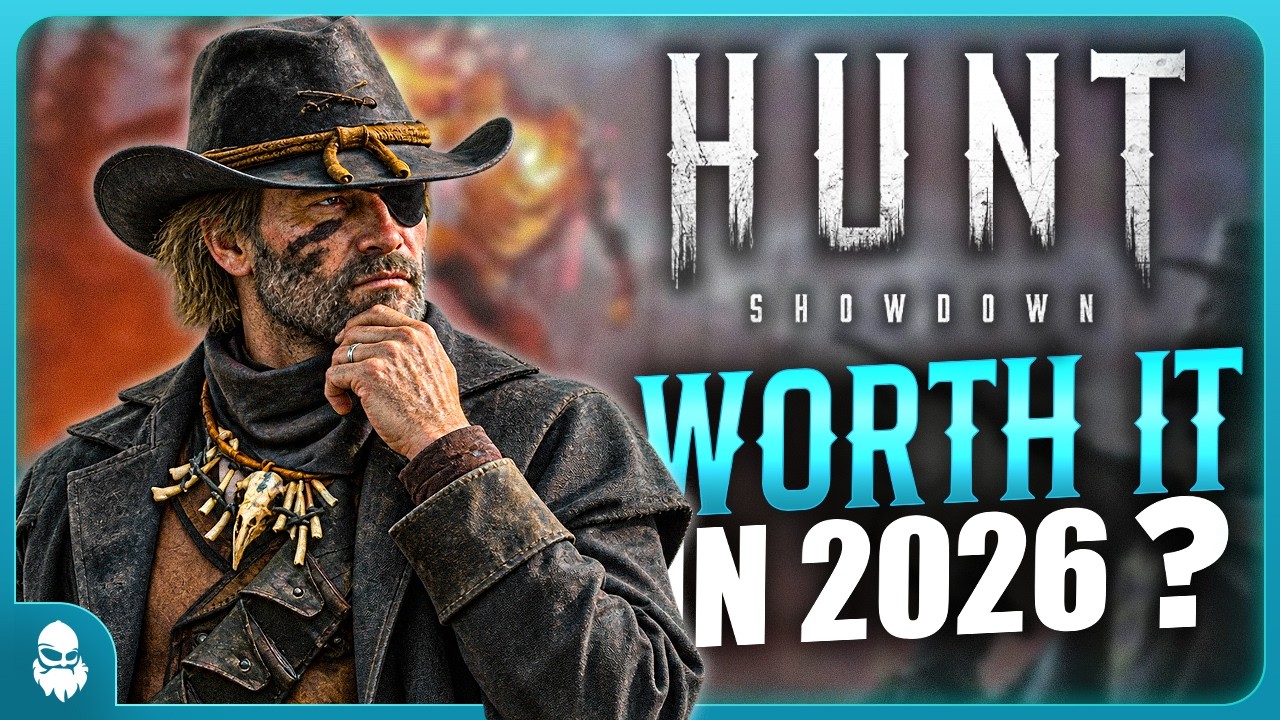
Is Hunt: Showdown actually worth returning to in 2026?
So without further ado, let’s dive into it!
1. THE OLD MAPS ARE BACK — AND THEY’VE CHANGED
Let’s start with one of the most obvious differences.
When Hunt: Showdown 1896 launched, Mammon’s Gulch was the only available map.
The old maps hadn’t simply been deleted, however. They were temporarily removed while Crytek upgraded them to the new engine standard.
Since then, the entire map pool has gradually returned.
Stillwater Bayou returned first, followed by Lawson Delta, and finally DeSalle, meaning all of the classic maps are now playable again alongside Mammon’s Gulch.
But these aren’t simply the exact same maps you remember.
They’ve received visual, lighting, vegetation and terrain upgrades, alongside a long list of gameplay changes.
Compounds have received new entrances, windows, ladders, buildings and sightlines, and Crytek has continued reworking problematic areas even after the maps returned.
Pitching Crematorium, for example, recently received one of its largest reworks ever, opening up entrances, improving visibility and reducing some of the frustrating choke points the compound has been known for.
So if you’ve been away since the 1896 launch, you’re no longer coming back to Hunt with three missing maps.
You’re coming back to four fully playable maps, and even the locations you recognize may not play exactly the way you remember.
2. HUNT HAS A SECOND GAME MODE
One of the biggest additions since 1896 is something Hunt had gone years without:
A completely new PvP game mode.
Bounty Clash takes the combat of regular Bounty Hunt and compresses it into a single compound.
Instead of spending an entire match searching for a boss, up to 12 Hunters spawn around a single compound containing an already dead boss target.
The objective is simple:
Get inside, banish the boss, fight everyone else, grab the bounty and get out.
Matches last only 15 minutes, which makes Clash drastically faster than traditional Bounty Hunt and gives you a way to jump straight into PvP.
And since its introduction, Crytek has continued developing the mode.
More compounds have been added, rewards and spawns have been adjusted, and most importantly, Bounty Clash now has its own matchmaking rating, separate from regular Bounty Hunt.
Personally, I still consider Bounty Hunt the main Hunt experience.
But if you stopped playing before Bounty Clash was introduced, you now have an entirely different way to play the game when you don’t feel like committing to a full match.
3. LOADOUTS WORK COMPLETELY DIFFERENTLY
This is probably the change that will immediately confuse returning players the most.
The old small, medium and large weapon-slot system is gone.
Weapons are now assigned a size between 1 and 5.
Your Hunter has a total weapon capacity of 5 slots, which increases to 6 with Quartermaster.
This creates combinations that simply weren’t possible under the old system.
A Size 3 primary can be combined with a Size 2 secondary without Quartermaster, for example, while Quartermaster opens the door for even more combinations.
But weapons aren’t the only thing that changed.
Tools and consumables are no longer separated.
Instead, they share a unified inventory, meaning you have significantly more freedom over how you build your loadout.
Want more tools?
You can do that.
Want to sacrifice some utility for additional consumables?
You can do that too.
There are still limitations preventing you from stacking ridiculous quantities of the same item category, but overall, loadouts are dramatically more flexible than before.
And as of Update 2.9, you can even add Traits directly into your saved custom loadouts.
That means you can effectively create an entire Hunter build — weapons, equipment AND traits — and apply it with a few clicks.
Which brings us to something else that has changed considerably.
4. THE UI HAS IMPROVED
We have to talk about it.
The UI introduced with Hunt: Showdown 1896 was probably one of the most universally criticized parts of the update.
And if the menu system was one of the reasons you stopped playing, I have some good news:
The UI you left is not the one you’re coming back to.
Crytek has spent essentially the entire post-1896 period iterating on it.
The gear screen has been redesigned.
Grid views and filters have been improved.
The loadout system has been reworked multiple times.
You can switch game modes without reforming your party.
Your last-match information is available directly from the lobby.
Traits are easier to manage.
Health configurations can be saved.
Weapon skins can be selected directly from your loadout.
You can even invite teammates directly using a lobby invitation code, which makes the entire process much more seamless and opens up the ability to play across platforms if you’re on console.
And additionally, a long list of unnecessary menus and interactions have either been simplified or removed.
Which raises the question; is it perfect now?
Well, No.
And if you fundamentally preferred the old Hunt UI, I’m not going to tell you that everything has magically gone back to the way it was.
It hasn’t.
But comparing the current UI to what we had when 1896 launched isn’t particularly close.
It’s considerably better and easier to use today.
5. AMMO ECONOMY AND SCARCITY HAS CHANGED
If your old strategy involved bringing a Mosin and endlessly feeding it ammunition throughout the match, you might want to pay attention to this one.
Crytek has made significant changes to ammunition and resource management.
Several of Hunt’s strongest long-ammo rifles — including the Mosin, Krag, Lebel and Berthier families — now use Long Special ammo.
These weapons can still share ammunition with each other, but they can no longer replenish from regular long-ammo crates.
Instead, you’ll need special ammo boxes, deployable ammo boxes or full resupply boxes, making ammo management considerably more important than it used to be.
But the changes go beyond ammunition.
If you’ve been away for a while, the word “Scarce” is something you’re going to see a lot more of in modern Hunt.
Scarcity is now used as a balancing mechanic, meaning certain weapons, ammo types and Traits can only be acquired within a mission rather than purchased normally.
This includes weapons like the Shredder, Wildland, Homestead and Flame Rifle, alongside powerful ammo types like Dumdum, Explosive and Spitzer, as well as traits like Death Cheat and Shadow.
So just because you have the Hunt Dollars or Upgrade Points doesn’t necessarily mean you can buy whatever you want anymore.
Crytek has also continued reducing reserve ammo on several weapons, further reinforcing the importance of resource management during longer fights.
Powerful weapons are still powerful, but you now have to think more carefully about what you bring, how much ammo you’re using and where your next resupply is coming from.
Overall, when combined with the loadout changes I covered earlier, these changes have successfully shaken up the established meta that dominated Hunt for years.
6. DEATH, BURNING AND HEALTH RESTORATION HAVE CHANGED
This one has gone through so many iterations that I’m going to save you the history lesson and focus on where the overall philosophy has changed.
Back before 1896, Necromancer — particularly Solo Necromancer — could lead to some pretty ridiculous revive situations.
With 1896, Necromancer became a Burn Trait, meaning it disappears after use.
Solo Hunters received a faster revive timer and full health restoration when reviving, but now only have one Necromancer charge unless they manage to acquire another one during the match.
Burning was also made significantly faster.
That system has since been adjusted again.
Downed Hunters now have fast and slow burning, depending on how they’re being burned.
Ignited hunters now burn quickly before transitioning into a slower state, while leaving the Hunter inside an active fire source keeps the pressure considerably higher.
At the same time, there are far more ways to restore missing health chunks than veteran players may remember.
Recovery Shots were added, restoring a health chunk upon use.
Various Traits and world interactions can restore chunks.
Extracting with a bounty now restores your missing health chunks.
And certain event mechanics add even more possibilities.
Some of these restoration options have subsequently been nerfed, so losing bars certainly isn’t meaningless.
But the overall system around dying, burning, reviving and recovering permanently lost health is considerably different from old Hunt.
So don’t assume the rules you remember still apply.
7. GUNPLAY HAS CHANGED BEYOND JUST BULLET DROP
Everyone remembers one of the most controversial additions to 1896:
Bullet drop.
Bullets now begin dropping after travelling beyond a weapon’s designated drop range, meaning long-range shots require you to compensate by aiming above your target.
Different weapons and ammunition have different drop characteristics, so the amount of compensation required depends on what you’re using and how far away your target is.
The system has also received some improvements since launch, including visual helpers on scopes that make landing shots at longer distances easier.
But gunplay has changed in several other fundamental ways since then.
Damage multipliers across different body parts have been adjusted.
Compact, medium and long ammunition now begin losing damage at different ranges.
Silenced weapons now sacrifice some damage compared with their regular variants, while Subsonic ammunition can be used to reduce the sound of gunshots further at the cost of velocity.
And on top of all of that, Crytek has added a huge number of new weapons and variants since 1896.
The Maynard.
Chu Ko Nu.
Bomb Launcher.
Auto-4.
Wildland.
Homestead.
Burgess.
And many more.
So while Hunt’s fundamental gunplay should still feel familiar, the overall systems have changed a lot and might take some time getting used to.
8. HUNT ACTUALLY HAS MORE… HUNTING
Over the last few updates, Crytek has been experimenting heavily with how players gather information.
And one of the biggest permanent changes is passive tracking.
The environment can now tell you whether another team has already passed through an area.
Ammo crates remain visibly opened after use.
Used envelopes stay open.
Medical kits leave bloody rags behind.
Disturbed birds leave feathers.
Dead animals remain in the environment.
Broken fences show that somebody vaulted through them.
Doors begin fully closed, but once they’ve been opened, they no longer return perfectly to their original state.
And there are several other examples.
If you know what you’re looking for, you can now enter an area and reconstruct what another team may have done before you arrived.
On top of that, Hunt has experimented with hidden extraction and supply locations, Scout Towers, Scouting Maps, tracking mechanics and additional Dark Sight interactions.
As of Update 2.9, extraction points, Scout Towers and Supply Points are hidden by default, but you have several ways of discovering them.
Taking clues reveals extraction points.
Scouting Maps can reveal hidden locations.
The Spyglass can discover locations from a distance.
Or you can simply find them while exploring.
Some people will like these systems more than others, but I really like the broader direction.
For a game called Hunt, there’s considerably more actual tracking involved than there used to be.
9. HUNT HAS GROWN A LOT BEYOND ITS ORIGINAL CORE
Modern Hunt has also expanded in a bunch of smaller ways that collectively make the game feel much larger.
Wild Targets have become more standardized.
Hellborn was introduced alongside 1896, while Rotjaw has subsequently been reworked to function more similarly — dropping a single bounty token without requiring a traditional banish and dropping a Scarce trait upon death.
A new type of consumable called Tarot Cards has also been introduced, each providing unique effects that can dramatically change the outcome of a fight or even an entire match.
There are new AI types and variants, such as Firebreathers and Brutes.
Story Challenges have been introduced.
Player Profile Cards allow you to display avatars, badges, titles and stat trackers.
The Shooting Range now has moving Hunter bots, allowing you to practice against something significantly more useful than a stationary dummy.
New-player onboarding has been improved with bots and gradually increasing difficulty.
Pings and the compass have been significantly improved.
And Hunt’s audio has received multiple updates for improved clarity.
None of those changes individually redefine Hunt.
But together, they’re important.
Because if the last version of Hunt you remember is the 1896 launch, you’re coming back to a game with substantially more features and quality-of-life systems around the core gameplay loop.
10. COMING BACK SHOULD ACTUALLY BE EASIER NOW
With update 2.9, Hunt now has MMR decay for returning players.
If you haven’t played Hunt for an extended period, the matchmaking system can now temporarily reduce the difficulty of your matches.
As you continue playing and get back into the rhythm of the game, that modifier gradually disappears.
This addresses a pretty obvious problem with returning to a competitive game like Hunt.
You might technically still be a five or six-star player according to your old rating…
…but that doesn’t mean you’re going to play like one after not touching the game for a year or two.
Instead of immediately throwing you straight back into the deep end, the game now gives returning players some room to regain their muscle memory before returning to their normal matchmaking level.
New players are getting a similar system where their matchmaking adjustment gradually disappears as they gain experience, instead of suddenly disappearing at a specific Bloodline level.
Combined with the improved tutorial systems, moving targets in the Shooting Range and other onboarding changes, getting into — or back into — Hunt should be considerably smoother than it was before.
Which finally brings us to the question I’ve been promising to answer since the beginning of this video.
IS HUNT: SHOWDOWN WORTH RETURNING TO IN 2026?
I think it is.
But I also think the answer depends heavily on why you left in the first place.
If you left around the launch of Hunt: Showdown 1896 because the game felt unfinished, the UI was frustrating, the old maps disappeared or you simply hated the state of the game at launch…
I think Hunt absolutely deserves another chance.
The old maps are back.
The UI has improved considerably.
Technical and audio issues have received continuous work, and the game runs and feels much better now.
There’s a huge amount of new content.
And several of the systems introduced with 1896 have now had more than two years of iteration behind them.
The version of Hunt you’re installing today is simply not the version that launched in August 2024.
On the other hand…
If you left because you fundamentally disliked the direction Hunt was taking, then the answer is more complicated.
Modern Hunt is more experimental than old Hunt.
Events frequently introduce powerful mechanics, and events have become the norm, rather than the exception. They are really more like seasons, each featuring major changes and updates and running more or less back-to-back, which means “vanilla hunt” is no longer a thing.
There’s more information available to players.
Health restoration is more accessible.
Loadouts are considerably more flexible.
Scarce weapons, ammo and traits have changed how certain powerful items are distributed.
And Crytek is clearly willing to make large systemic changes rather than preserve Hunt exactly as it was five years ago.
And if those are the things that pushed you away, then I’m not going to pretend they’ve disappeared.
In many cases, Hunt has actually moved further in that direction.
But personally?
After more than 8000 hours, I still think Hunt offers an experience that I can’t really get anywhere else.
The combination of incredible audio, high-stakes PvP, ridiculous loadout possibilities and unpredictable fights where absolutely everything goes wrong is still uniquely Hunt.
And despite some questionable decisions along the way, I think the game today is in a significantly better place than it was when 1896 launched.
So if you’ve been sitting on the sidelines for the last year or two wondering whether it’s finally time to reinstall…
Yeah.
I think now is a pretty good time to find out for yourself.
And if you do decide to return, you’re going to have quite a lot to learn.
Luckily for you, I’ve covered every single major Hunt update along the way, so if you want to dive deeper into any of the changes we’ve talked about today, you can find full breakdowns here on the channel.
I’ve also got plenty of guides covering everything from beginner mistakes to individual weapons and mechanics, so make sure you subscribe if you want to get back up to speed.
And if you’re someone who DID return recently, I’d love to hear your perspective:
Why did you originally stop playing, what made you come back, and how do you feel about Hunt in 2026?
Let me know in the comments below.
Thank you so much for watching, and until next time —
I’ll see you in the Bayou!